

How We Frame Climate Adaptation Opportunities
- Admin

- Oct 30, 2025
- 3 min read
Updated: Jan 21
In our view, Climate Adaptation Technology (CAT) can be organized in 3 distinct 'layers', which are, of course, connected. Each 'phase' plays a critical role in reducing risk and building resilience, but they differ meaningfully in scalability, defensibility, and attractiveness from a venture investment standpoint.
Layer A: Visibility, Resilience, and Repair & Recovery Intelligence
If resilience is the objective, visibility is the prerequisite. After a flood, wildfire, landslide, or extreme storm damages an asset, owners are immediately forced into repair and recovery decisions: rebuild as-is, reinforce and harden, relocate, or exit entirely. The right choice depends on understanding whether the event was an anomaly—or a preview of what’s coming more often.

Too often, adaptation arrives late. Not because people don’t care, but because they never invested in the data, monitoring, and predictive insights needed to see risk accumulating. Without visibility into changing flood frequencies, erosion rates, subsidence, heat stress, or hydrologic variability, disasters are treated as surprises rather than signals.
Technologies that generate, integrate, and interpret climate-risk data—across time and space—are foundational to effective adaptation. They inform smarter recovery, reduce repeat losses, and prevent capital from being misallocated into assets that will fail again.
Investment Opportunity:
This is the most attractive layer in the opportunity stack for VC. It is software- and data-driven, highly scalable, broadly applicable across sectors, and sits upstream of every major adaptation and capital decision. As the saying goes: you can’t manage what you don’t measure.
Layer B: Decision Support, Scenarios, and Tradeoffs
Once risks are visible, the next challenge is deciding what to do about them. This 'phase' focuses on translating insight into action through scenario analysis and decision-support tools. (NOTE: This realm has traditionally been the bread and butter of consultants.) Asset owners must answer practical, high-stakes questions: If we elevate this road, reinforce that pipeline, or redesign this facility, how does risk change over 5, 10, or 30 years? What does it cost, and what losses does it avoid?

These tools turn climate adaptation from a reactive exercise into a structured, defensible decision process. They help organizations prioritize investments, compare adaptation pathways, and justify capital allocation to boards, regulators, insurers, and investors.
Investment Opportunity:
This layer is also attractive for VC, though slightly less than Layer A. It is analytics-heavy, benefits from recurring use, and directly influences large downstream spending. However, it often depends on high-quality inputs from the visibility layer and can face longer sales cycles.
Layer C: Procurement and Physical Adaptation
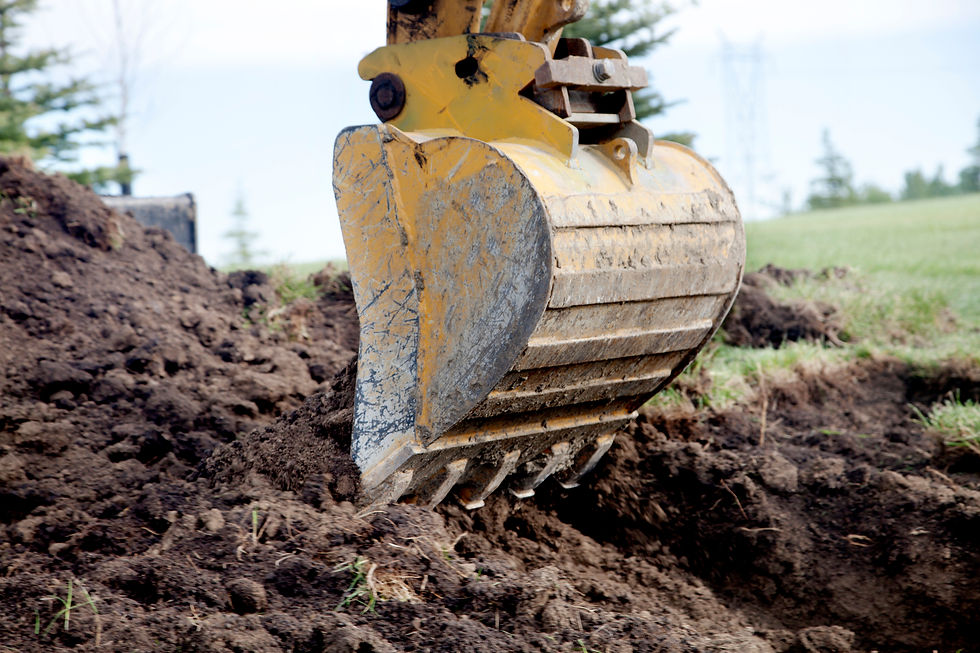
The final layer in the Climate Adaptation Technology (CAT) opportunity stack is execution—buying, installing, and maintaining physical solutions that reduce risk. This includes flood defenses, drainage upgrades, slope stabilization, cooling systems, grid hardening, and asset relocation. These interventions are essential for real-world adaptation and ultimately deliver the physical resilience society needs.

However, these solutions are often bespoke, capital-intensive, geographically constrained, and slower to scale. They tend to resemble infrastructure, construction, or project finance more than venture-backed technology.

Investment Opportunity:
This layer is critically important, but generally the least attractive for traditional VC. The largest venture leverage typically lies upstream, where intelligence and decision tools determine what gets built, where, and why—long before procurement begins.
A Final Word...
There is no single “right” way to frame the Climate Adaptation Technology (CAT) opportunity stack. The space is broad, evolving, and deeply interdisciplinary. From
Mazarine Climate’s perspective—the framework we use helps us understand where innovation is emerging, how value is created, and where venture-scale opportunities are most compelling. Others are welcome (and encouraged) to apply their own lenses.


